Why I Love AI
Tomorrow I'm going to get on a plane to Canada for a few days, and when I get back it'll be the start of teaching for another year. But next week is also a very weird milestone, I realised the other day: it will be twenty years I left home to go to university to study computer science. Twenty years! Boy that's a long time. I thought that made it the perfect time to write something I've been thinking about all year. The first word of my bio is usually 'AI' and I still haven't changed it. I keep thinking about it, mainly because it causes way more problems and confusion than anything else, but I can never quite bring myself to do it. This post isn't about why I haven't removed it yet (the why is mainly just that I'm stubborn) but it is about why I ended up with AI in my bio in the first place. I wanted to tell you what AI meant to me, and what I still love about the discipline, and how it links to what we now understand AI to be.
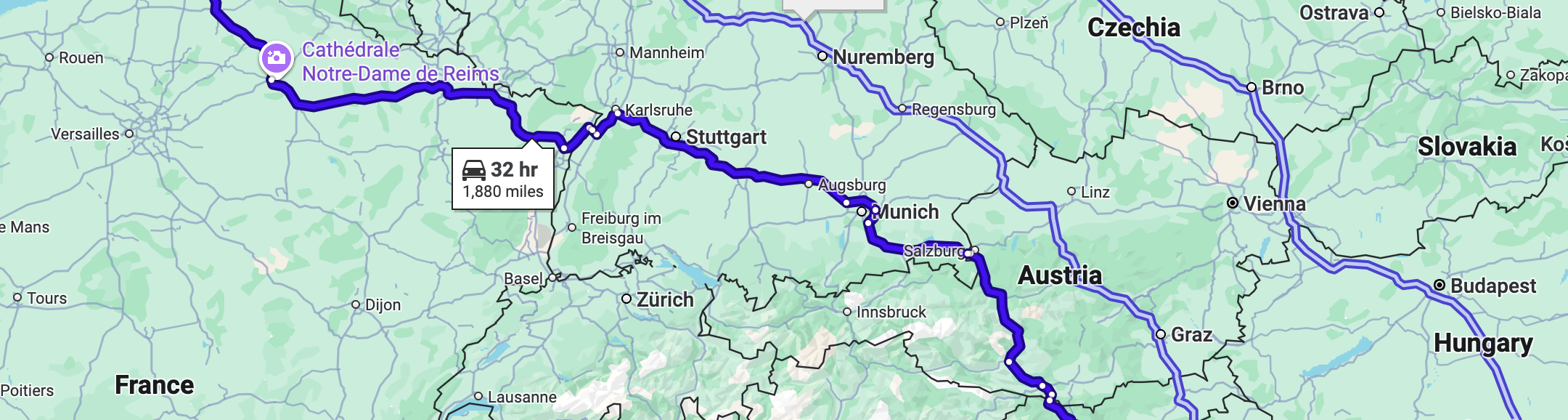
When I went to study in London twenty years ago I signed up for a specialised degree within computer science: Computing with Artificial Intelligence. This didn't actually mean much, as it turned out, and I don't even put it on my CV now, but I knew I wanted to study AI right from the beginning. AI was not a very appealing field to most people because, prior to the late 2010s, the general consensus around AI as a field is that it produced failures. One reason is that in the late 1980s AI experienced a huge boom followed by an even huger crash which was so bad researchers had to rebrand AI work in the 1990s to get it funded at all. But the real reason AI was known for its failures is more fundamental than this: when AI systems start working properly, we tend to stop calling them AI. This is known as the AI Effect, or as Larry Tesler put it, "AI is whatever hasn't been done yet". Plotting a driving route from London to Istanbul today is not AI, it is now just something phones do. Fifty years ago this would be magic. This is the AI Effect in action, shaping how we understand technology as it goes from experimental, to novel, to functioning, to natural.
So of course AI as a field didn't just produce failures, but its successes tended to be subsumed into other areas of technology really quickly, which only really leaves the failures (or things yet to succeed) to be labelled as AI. This didn't bother me though, in fact I think it may have drawn me in more, but I think the important thing to understand is why AI ended up with this reputation. After all, every area of research is about trying new things and often that results in failure, but in 2006 AI was an outlier compared to other fields within computer science in terms of how it was perceived, and the reason for this was, I think, because of the philosophy the field is built on and what problems it chooses to tackle (or, chose, I guess a lot of this blog post should probably be past tense).
At its core, AI is a field built on trying to get computers to do things that they can't do. This is really important. Other computer science disciplines are more 'do or do not' on the whole, they are about setting clear goals and then seeing precisely if they can be achieved. You set out to make a faster CPU because you can, you set out to make a more optimised compiler because you know it can be done. Even quantum computing, which for years was research about devices that didn't even exist, was extremely methodical and planned-out. In AI, however, we're often asking how close we can get to an answer, or how well we can approximate a solution to something. We usually aren't looking to do something perfectly, because if there was a perfect answer it wouldn't be AI any more - it would just be something computers do. Historically, AI is a field about struggle, failure and trying to be clever in a very stupid way.
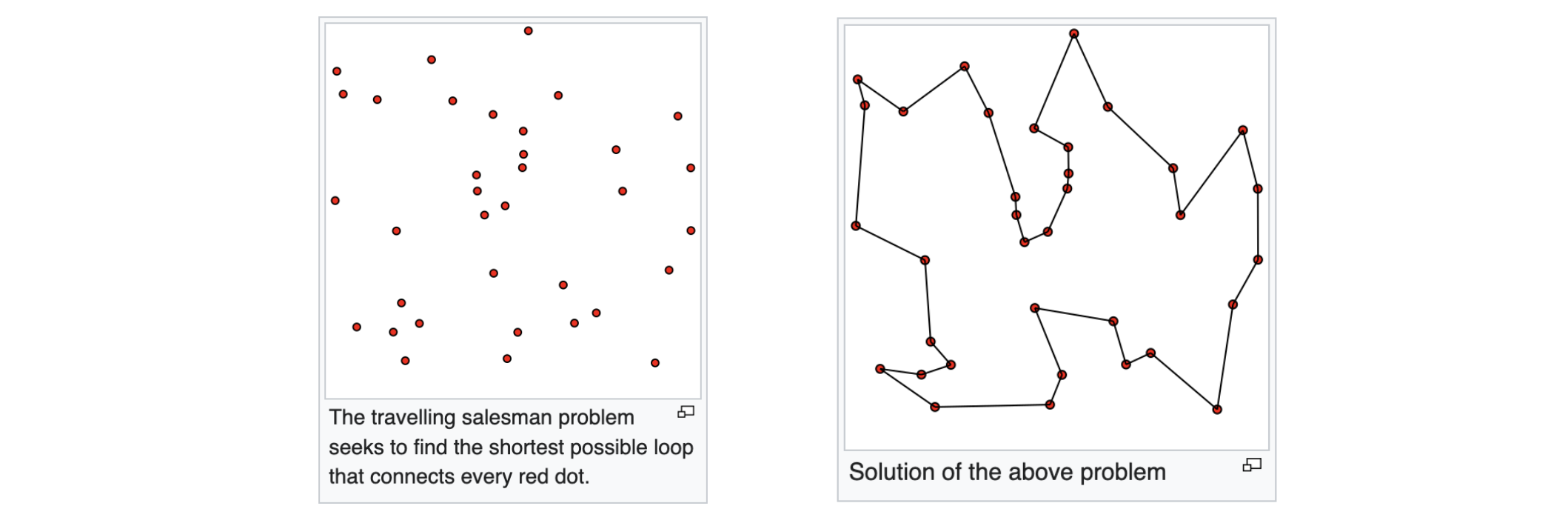 Images via Wikipedia
A Worked Example
To give you a more concrete example, let me tell you about the Travelling Salesman Problem. It's an old computer science problem that we often teach to first-years, and it goes like this: suppose I want to visit five cities in the UK, starting from London. What order should I visit them in so that I have to do the least driving in total? There are lots of different ways you could visit all five cities, so you'd have to check each possible route to find the best one. That would take quite a long time. Now imagine you wanted to visit five hundred cities. There are so many combinations that checking them all begins to feel a bit impossible.
There's two ways you might want to approach this. One is to say, well, if the problem is too big to compute then we obviously need a bigger computer. We need to calculate all the possible routes, and if that takes a long time then our contribution to this research problem will be to build a better calculator. Faster, more efficient, maybe optimised specifically for solving this kind of calculation. The other approach is to ask how well we can solve this problem with resources we already have. If you only have five seconds or a busted old CPU to choose the next city the salesman will travel to, what's the best answer you can come up with? This latter kind of scenario is where a lot of the juiciest AI research existed when I began studying it.
What this means in practice is that AI researchers spent a lot of time looking for patterns, shortcuts, cheats and insights. We talk about heuristics, rules of thumb and abstractions. What if you just always travelled to the nearest city, would that work? Then you wouldn't need to do any calculations at all. It turns out that works out okay in some scenarios, but not most. What if you went to the city with the most unvisited connections? The least? The one furthest away? The one with the smallest average ongoing connections? Or perhaps you need to search a bit further. Should you search wide, and check all the connections from each city as you go? Or search deeply, and try out full paths before starting again from the beginning? All of these result in different algorithms, different approaches, they demand different evaluations, different insights.
Facing insurmountable problems also forces you to get to know the context of the problem. Many AI tasks are entirely abstract. The travelling salesman problem, in isolation, is about mathematical graphs. But as soon as we put the problem in context we now have a wealth of extra information that can help us shape a solution that fits the real world. If our travel problem is about travel between cities then we can take into account daylight hours, road versus rail connections, or topography. This is one reason why AI was also one of the areas of computer science that had the most connection to real people and problems. The solutions being built were never perfect, and they needed every edge they could get, and so learning about the real world and engaging with people affected by our work was part of the research.
Computational Creativity
When I started my PhD in late 2010 I joined an even more extreme fringe of AI research interested in creativity. The Travelling Salesman Problem is a hard problem, but it also has a correct answer. If you check all the paths you can pick the best one, so even though it is very hard to do, we do theoretically know how to answer it. This is part of a class of problems that are common in computer science where it is easy to generate a solution (you can just write down all the cities in a random order) but hard to verify whether it is correct or not (because you need to have checked every possible order to know if you're right). But creative problems take this up a notch. If we want an AI to make a painting, and have it contribute to a creative community, then what is the right answer we are checking against? What is the 'correct' answer to the task of painting? There isn't one. So what do you do?
It turns out you don't really need one to make this an interesting thing to research. Remember earlier, when we mentioned the AI Effect subsuming 'perfect' AI systems into general tech? Perfect solutions isn't necessarily the end goal for most AI researchers. The process of trying to do something impossible and failing is extremely illuminating and can reveal a lot of fascinating stuff, and invent a lot of cool things. My PhD looked at how AI might model or participate in the game design process, but it was never going to produce a good AI game designer. I built a lot of very fancy procedural generators, often tied together with other systems. They generated a lot of jank and silly things, and they also helped me think about how we design procedural generators, how we think about game design at a fundamental level, how to model people's theories of game design and lots of other things.
Picking impossible problems is particularly good, I think, because it removes the illusion that you might be able to answer the problem with a bigger calculator. We now have so much computing power to spare that solving the Travelling Salesman Problem for hundreds of cities is a lot easier today than it was fifty years ago. So it becomes tempting to stop looking for smart, efficient or interesting answers and just... use your exponentially more powerful computer to calculate an answer the stupid or hard way. And in some cases that might be good enough for the economy or industry or whatever who just want a bigger or better answer at any cost, but it's not what I got into research for. Impossible problems are great in that regard because there is no shortcut. You cannot get around the problem by spending more money. You have to work smarter. This was also great for academics with no resources and no funding, because impossible problems aren't appealing to big companies and even if they were they can't spend money to outcompete you.
This particular kind of applied AI research is beautiful to me, and why I fell in love with research. You start with an impossible problem, and laughably few resources, and then you ask: how clever can I get with this? And there are so many directions to explore. You might invent a better algorithm that takes advantage of the structures of the problem to chop away huge quantities of unnecessary work. You might discover a way of estimating parts of the answers that are always inaccurate but consistent enough to be useful. You might learn something interesting about the way humans solve the same problem, and figure out how to incorporate it into your solution. You will never get the right answer. That's not what you're here to do. You're here to squeeze every drop out of the knowledge, techniques and insight that you have around you, and to see what new things you can force out of what you already have.
More is More
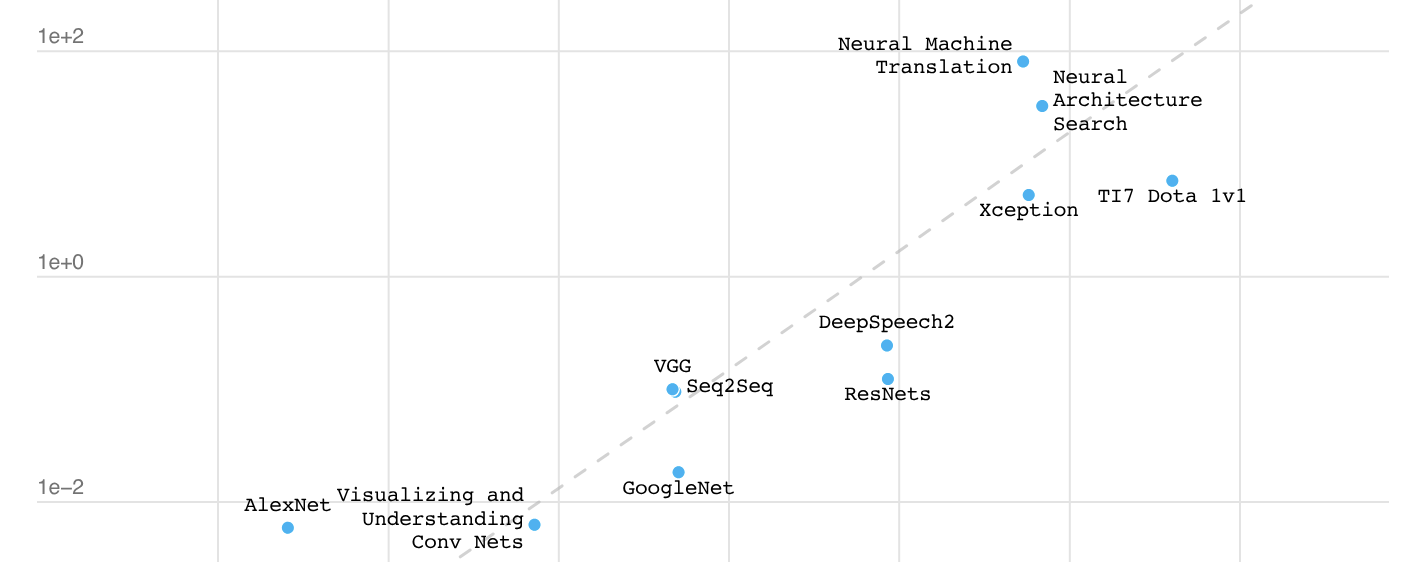
I don't want to talk about generative AI at length here, because I won't capture everything I want to say in a few hundred words, but I did want to highlight another reason why I find the technology boring on a professional level: generative AI is not AI in the sense of the field I describe above. There have been a handful of advances in the last decade that were genuine contributions to AI knowledge. They were about squeezing really interesting approximations out of very little resources. These advances, in the spirit of AI research, were about getting imperfect answers using very little. Everything that has been built on it, though, is 99% scale up. Modern AI products are not scientific achievements, they are, at best, engineering ones if not purely infrastructural ones. And we are now in an era of AI research that is devoid of any spark of what I loved about the field twenty years ago when I was first learning to program as an undergrad.
I reviewed an AI paper the other day, and I'm not breaking anonymity with this description because it's one of about a dozen identical papers I've reviewed this year alone, where the core contribution was simply: we asked an LLM to do this thing. That was the paper's contribution to AI research. They took a product built by a private company and they asked it to do something, and then they reported that it did it (with no evaluation). It's perfectly okay if this is AI research now, that's fine, maybe you see value in someone reporting that they learned this was possible. Times change, words change, and if I am no longer in this field any more then I will come to accept it and find a new space to be in. But I look at papers like this today and I just find it... impossible to reconcile with the world I got excited about two decades ago. So much of AI research now is simply using the products of a handful of companies to claim they can do something. If you're lucky, they might ask another LLM to evaluate the results. The research is investigating the applications of capital, not expanding our understanding of the world.
By contrast, the reason why procedural generation as a field still gives me energy is that it is fundamentally about the same things I saw in AI back in 2006. A procedural generator can never perfectly produce the thing it is trying to generate - that's not what it's there for. The ways in which it imperfectly produces things is always part of its texture and design, and the best designers know how to lean into this. A procedural generator is an opportunity for a designer to think about their creative process, to model something about it and to model themselves, and to then expose that model (and its flaws) to the player. It is trying to do as much as possible on the smallest budget, and that friction is what creates all of the chaos, the beauty, the excitement that comes with the space. I think game design shares a lot of these same qualities, as people try to find clever ways to make diorama worlds that invite the player into an experience, using as few resources as possible and the lightest touch they can.
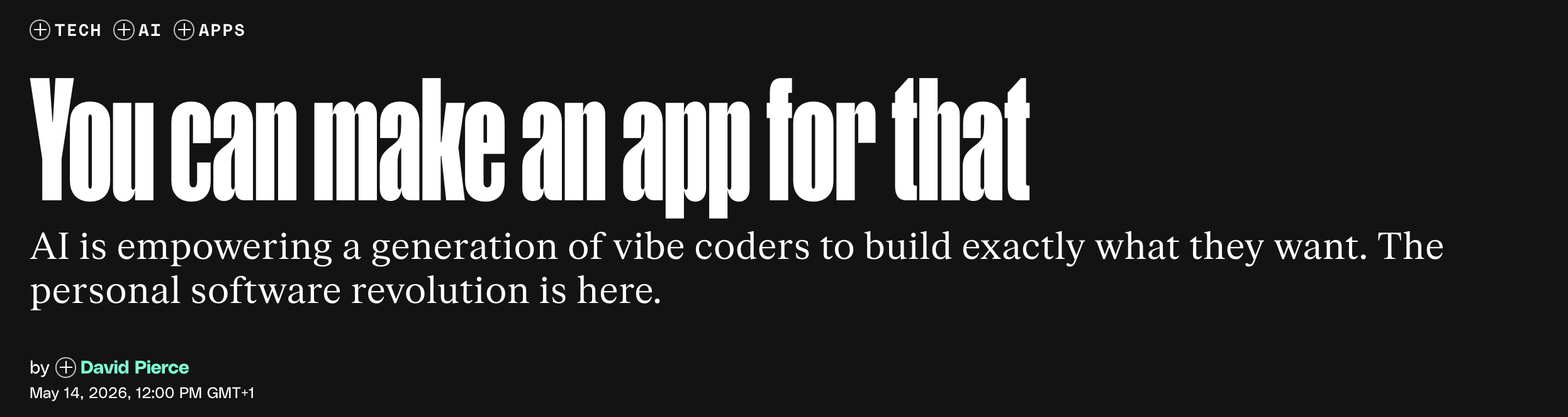
The process of shifting from "let's think about how to do this" to "let's just throw resources at the problem" is evident far beyond AI, beyond computer science research. I think it's why the graphics race in the games industry has always been so funny to me, it's a similar idea - that instead of good art direction, you can just double the resolution of the textures and expand the lighting budget. It's the philosophy you see creeping in whenever anyone uses generative AI in a creative context instead of making something themselves. And because the public conception of AI is so fully captured, AI is becoming synonymous with this process of extreme capital leverage. I know people who ask ChatGPT what the date is, or what simple maths problems are, or for information that could be found in the first sentence of a Wikipedia page. We have completely detached our sense of what makes a good solution to a problem - it is easier to waste ten times as much on an answer you didn't have to think about instead. I see this in the same push for AI coding to enable 'personal' app creation, for example. Instead of trying to find efficiency, commonality, knowledge, it is faster for me personally in the short term to rent a trillion dollar autocomplete and not think about it.
In 2025, OpenAI received $40bn in a single investment round. That is more than the 2025 scientific research budget for the whole of the UK. And the whole of Europe. And the US National Science Foundation budget. All combined. When I see stats like this it makes me think about what I loved about AI. I think about sitting in a coffee shop in 2007 as an undergrad, reading a chapter about the Navier-Stokes existence and smoothness problem in a book about the Millennium Problems. I think about the thrill I felt trying to do stupid things with computers, and finding interesting things in the process. I think about how every piece of research software I've ever made has been built and run on a mid-range laptop. And I wonder what every colleague of mine, every publicly-funded scientist and engineer, across Europe and North America, could've done if we'd simply doubled their funding for a year. Or just not laid tens of thousands of them off.

I Heart AI
Anyway. That era is dead and gone now - which isn't to say that no-one does research like they used to, they do, I have many wonderful peers around the world still doing cool stuff. But it is a lot rarer these days. I have witnessed a lot of change over the last decade, but 2026 was different, and there has been a significant shift in the baseline of what large groups have collectively decided to accept, particularly in academia and in the games industry. I still love AI and I am still an AI researcher at heart, but I think 'at heart' is the only place that this definition of AI really exists any more. But then, I think about where AI was twenty years ago, when I set off to learn about it for the first time and... I suppose most people didn't care about it then either, really. So perhaps this is a little poetic.
I think I'll continue to describe myself as an 'AI researcher' for a little while yet, and I still have my tongue-in-cheek "not that kind" disclaimer added on. It'll generate misunderstandings and get me added to blocklists and occasionally probably make people not want to talk to me. But I'm not quite ready yet to give up on that bit of my identity just yet.
If you like reading my writing about topics like this, I wrote a book about procedural generation this year and then sort of didn't promote it due to various reasons. You can pick up a copy here. I'll also be speaking at New Scientist Live next month, and one or two more places before the end of the year (to be announced soon). Thanks for reading.